
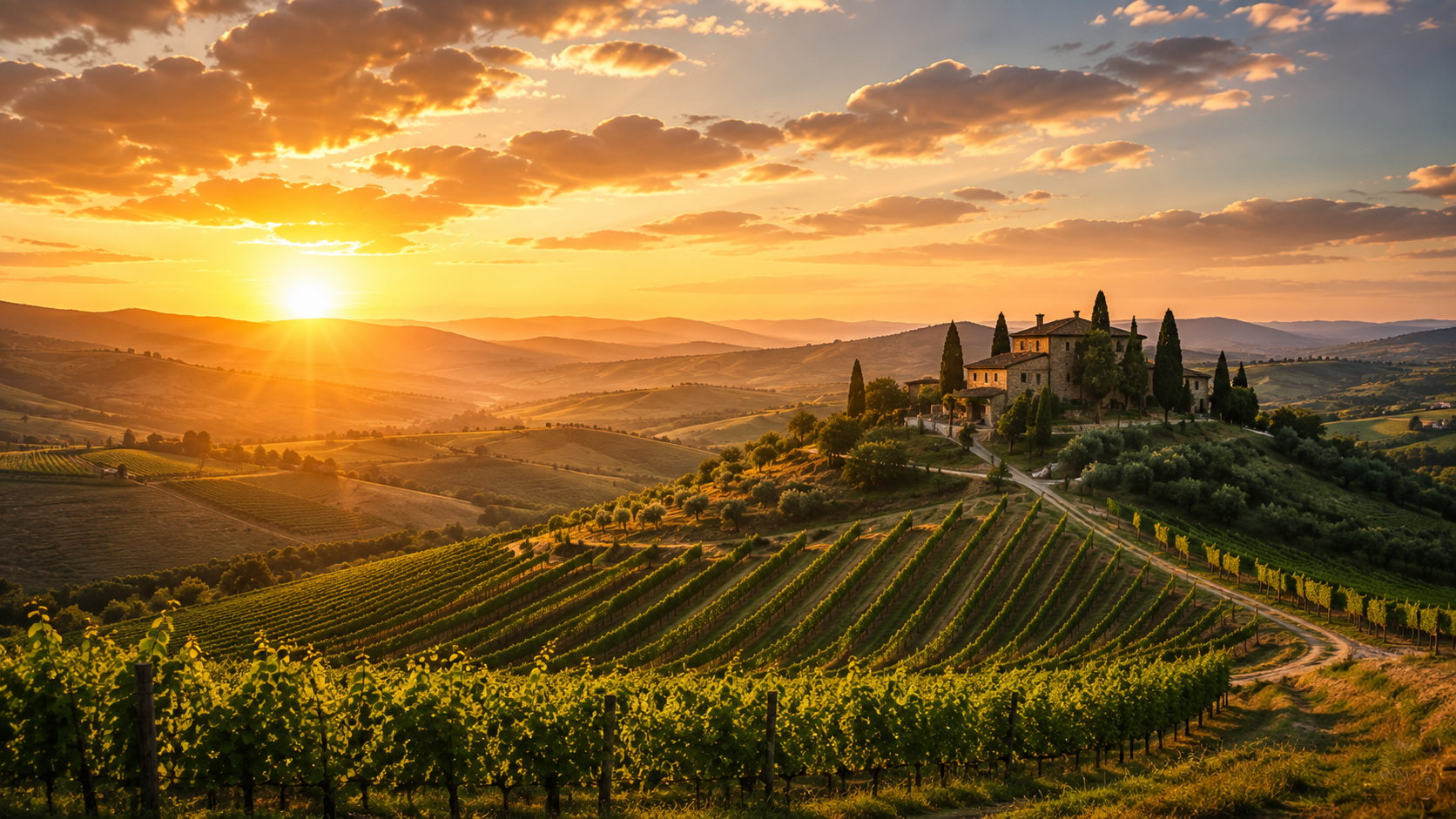
The Meaning of Stewardship: Caring for Land Across Generations


August 10, 2026 | Maja Randall

Introduction

There is a fundamental difference between simply owning a piece of land and truly caring for it. While ownership grants legal rights and titles, stewardship carries a much deeper weight of responsibility.

In our modern world, land is frequently viewed through the clinical lens of investment, utility, and market value—measured in acres and appraised for its immediate output. Yet, throughout the Italian Tuscan countryside, a different perspective has endured for centuries: the belief that land is not merely an asset to possess, but a living legacy to protect, nurture, and ultimately pass forward.

This philosophy is woven into the very fabric of the landscape—in the hillsides lined with precisely tiered vineyards, the ancient olive groves that have weathered centuries of change, and the stone farmhouses that stand long after their builders have gone. Everywhere, there is evidence of people who understood they were not simply beneficiaries of the land, but its caretakers, measuring their success not in years, but in generations.

  1. Walking through an old vineyard, one quickly realizes that the vitality visible today began with work performed decades earlier. The vines producing fruit this season were often planted by someone who knew they might never live to enjoy the full maturity of the harvest. Similarly, the stone terraces holding the soil in place were constructed by hands long forgotten, yet their effort remains as a silent record of decisions made with a horizon that extended far beyond a single lifetime.

    There is something profoundly moving about this long-term devotion, especially in a culture increasingly focused on speed and instant results. While many of today's choices are driven by immediate quarterly outcomes or election cycles, the vineyard operates on a different clock. Growers understand that soil health, vine selection, and water management require a patience that prioritizes the land's future vitality over maximizing the next harvest.

  2. Stewardship, therefore, is an act of looking forward. It asks us to consider not only what we can extract from the world, but what we will leave behind. This mindset of continuity extends far beyond agriculture and into the heart of rural Italian communities, where historic architecture is preserved and local festivals celebrate customs that connect the present to a vibrant past.

    Each of these acts reflects an understanding that inheritance involves more than just receiving; it involves the active duty of preserving. This is perhaps most powerfully illustrated by the olive tree. Many of Italy's trees are astonishingly old, their twisted trunks bearing witness to centuries of shifting cultures and changing governments.

    The olive tree offers a particularly powerful example.

  3. Generation after generation has tended these groves, benefiting from the oil while ensuring the trees survive for those yet to come. No single generation can claim full credit for their existence; instead, each has served as a temporary steward. This realization invites us to recognize that much of what enriches our lives—our treasured landscapes and celebrated traditions — emerged from similar, patient acts of care.

    Because these legacies were rarely created overnight, stewardship must be viewed as an ultimate act of optimism—a quiet faith in the future. We plant a tree believing someone will one day enjoy its shade; we restore a farmhouse believing it will shelter families for another century. It is a commitment tout comes we may never fully witness, a gift to the future that values preservation as much as progress.

  4. While such selfless investment might feel countercultural today, it is exactly what parents, teachers, and mentors do every day. They invest their time and heart knowing the greatest impact may not be visible for years. The land teaches us this same lesson: a vineyard thrives only when each generation receives it with gratitude and passes it forward with intention.

    When we choose to care, we ensure that relationships, values, and stories survive the passage of time. The Italian countryside reminds us that our role is not to consume what has been handed to us, but to become worthy caretakers of it. This responsibility transforms land into more than just property and traditions into more than just habits; they become a sacred trust.

  5. Ultimately, we do not truly own the things that matter most—the land, the stories, the traditions—we merely borrow them for a season. Our greatest task is to leave them stronger, richer, and more vibrant than we found them, ensuring the cycle of care continues uninterrupted. In the end, stewardship is the most enduring legacy we can leave: a world made better by the simple, faithful choice to look beyond ourselves and tend to the future.